Theme of the Scenic Route

Experience Japanese history directly

ONE MORE STEP FROM TOKYO
GIFU × AICHI × TOKYO
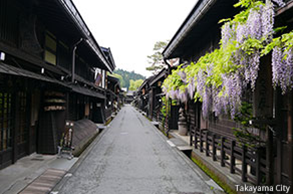
The Old Town District
Takayama City
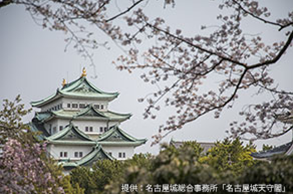
NAGOYA CASTLE
提供:名古屋城総合事務所「名古屋城天守閣」
Tokyo Toyosu Manyo Club
万葉倶楽部株式会社

A journey to experience Japan’s history and tradition and the beauty of the four seasons

This trip lets you experience the appeals of Tokyo and the Tokai area through experiences and townscapes that offer a sense of Japan’s history and tradition.
Tokyo offers an opportunity to experience its unique appeals where modern novelty and tradition coexist through destinations that teach of history, or indigo dyeing workshops offering experiences of traditional dyeing techniques. One such example is Senkyaku Banrai, one of Tokyo’s more recent tourist destinations.
Meanwhile, the Tokai area route offers a variety of destinations that show the unique character, seasonality, and food experiences of each area, such as Magome-juku in Gifu, the old townscape of Hida Takayama, and the Pottery Footpath in Aichi, letting you get a sense of the other appeals of Japan that are different from Tokyo.

Destination

Itinerary​

5Days

Transport

JR Tokaido Shinkansen
Tokyo to Nagoya
About
1 hour
30 minutes
*The times represent the approximate time needed to travel between major spots.
Day 1
Tokyo: experience traditional culture in the Tokyo area
The East Tokyo area offers a variety of tourist destinations such as Asakusa and Toyosu.
This area, where countless people gathered since ancient times, developing their culture and history, will realize a rewarding journey for you through unique Japanese experiences.
1
Koto City Fukagawa Edo Museum
The Fukagawa Edo Museum in Koto City offers a full-size reproduction of the townscape of the Fukugawa Sagacho community as it appeared in the late Edo period, a time known as the Tenpō era. In addition to the use of sounds and lighting to recreate the changing atmosphere throughout each day, visitors can also enjoy hands-on exhibits that let them climb into the shops and Nagaya long houses to interact with the implements of daily life.
30 minutes by taxi
2
Shunkaen BONSAI Museum
Bonsai is a work of art that creates magnificent natural scenery in a hachi (small pot). Shunkaen BONSAI Museum in Edogawa-ku, Tokyo was created in 2002 from the desire of Kunio Kobayashi, a bonsai artist and recipient of the Prime Minister’s Award, one of the three grand prizes of Japan, and the Higashi-Kuninomiya Culture Award, to deeply spread bonsai to the world. Over 1,000 bonsai line a garden with a pond where carp gracefully swim and a majestic Japanese house. Each hachi (pot) has different style, all of which are beautiful and have a dignified appearance. The museum also offers classes (for a fee and available in English and Chinese) where you can experience the charm of bonsai. Classes can be booked three days in advance. All you have to bring is yourself as tools and training bonsai are provided. Since you may take completed bonsai home with you for an additional fee, drop by and experience the beauty of bonsai.
30 minutes by taxi
3
Tokyo Toyosu Manyo Club
Situated in an ideal location overlooking Tokyo Bay, the Tokyo Toyosu Manyo Club is a 24 hour spa offering you a chance to enjoy hot spring waters transported from such famed sources as Yugawara and Hakone. The spa offers a wide variety of facilities such as an open-air bath, a bedrock bath, and a relaxation room. In addition to servicing daytrip bathers, the facility also offers hotel accommodations and a flexible time schedule, including early morning and late night use, making it a convenient base for your Tokyo sightseeing. The adjacent Toyosu Senkyaku Banrai recreates a townscape from the Edo period, offering you a chance to enjoy dining and shopping. With easy access to and from Haneda Airport (Tokyo International Airport) and other major Tokyo attractions, these facilities offer you a moment of relaxation for both mind and body during your busy journey. Guests can relax indoors in a Yukata robe for an experience of relaxation that is a bit out of the ordinary.
万葉倶楽部株式会社
60 minutes by taxi
4
Indigo Dyeing and Weaving Studio Wanariya
We are the Indigo Dyeing and Weaving Studio Wanariya. We are located just 10 minutes walk from Sensō-ji and Kappabashi! Here at our studio, you can create your own indigo dyed item or woven item that is unique in the world. We offer workshops to a wide range of visitors, from small children of age 4 and older to senior citizens. There is no such thing as failure when it comes to indigo dyeing and weaving! Instead, the most important thing is to enjoy yourself. There is no need to bring anything with you, and you can take your creation home with you on the day! Each creation can be completed in between 60 and 90 minutes, though there is some variation between individuals. We hope to see you here!
2 hours 10 minutes by train (JR) Show details
40 minutes by bus
15 minutes by foot
Days 2 to 4
Gifu Prefecture: a fascinating journey through historic townscapes and cultural experiences
Gifu offers a rich abundance of historic scenery, such as Magome-juku and the historic townscape of Takayama.
Experience unique local appeals through experiences only available in Japan, including Japanese swords and a historic morning market.
5
Cutler SANSYU Seki Hamono Museum
Located in Seki City, Gifu Prefecture, this is a multi-purpose facility dedicated to cutlery and that offers hands-on experiences. Seki City is Japan’s leading cutlery production region, boasting a history of over 800 years.
The facility includes a factory-direct shop where you can purchase popular gifts such as fingernail clippers, kitchen knives, and cooking scissors. It also features the Seki Hamono Museum, where you can join a workshop to learn about the smithing processes behind Japanese swords and knives. Visitors can enjoy guided tours and hands-on experiences like workshops led by master craftsmen where you can learn to make your own original paperknife.
Please note that all workshops and tours require a fee and advance reservations.
Cutler SANSYU
15 minutes by foot
40 minutes by bus
2 hours by train (JR)
6
The Old Town District of Hida Takayama
The Old Town District of Hida Takayama prospered as both a castle town and merchant town during the Edo period, and the three historical streets passing through Kamicho and Shimocho are designated as an Important Preservation District for Groups of Traditional Buildings.
Rows of lattice-shuttered houses and sake breweries line the streets with small canals flowing before them, offering a chance to slip back in time to the Edo period. Stroll through the historic streets that transform with the changing seasons and take in the scenery deeply rooted in the traditions of Hida Takayama. Along the way, savor local specialties such as Hida Beef and browse for unique souvenirs and traditional crafts at local stores.
Takayama City
10 minutes by foot
7
HIDA TAKAYAMA MIYAGAWA Morning Market
This morning market is said to have been held continuously for several hundred years, dating back to the Edo period. Known as the kitchen of the common people, the market offers fresh vegetables alongside handmade pickles produced lovingly by local farmers, as well as other processed agricultural produce. Recent additions include folk crafts and areas where visitors can stroll and sample various restaurants and cafés. Still, the greatest appeal lies in the opportunity to connect with the warm and welcoming people of Hida Takayama.
3 hours by train (JR)
25 minutes by bus
8
Nakasendo Magome-juku
Magome-juku is the 43rd post station, or Shukuba, along the 69 Stations of the Nakasendo that stretches from Nihonbashi in Edo to Sanjo Ohashi in Kyoto. It is the southernmost post station among the 11 stations along the Kiso road, a section of the historic Nakasendo route.
Magome Juku has been awarded a one-star rating by the Michelin Green Guide Japan.

Following a steep mountain ridge, the post station features inns and restaurants arrayed along a sloping stone-paved road stretching approximately 600 meters.
The cobblestone streets are lined with old, lattice-windowed residential houses, museums, tea houses, and souvenir shops on both sides, a scene that very much resembles how the post town looked in the Edo period hundreds of years ago.
Magome Tourism Association
10 minutes by taxi
1 hour 30 minutes by bus
2 minutes by train (JR)
Days 4 to 5
Aichi Prefecture: a journey to discover new wonders through Japan’s leading historic buildings and experiences of industry and technologies.
Aichi Prefecture is associated with Tokugawa Ieyasu, who started the Edo period, and is home to historic buildings and a concentration of the industry and technology that supports Japan.
Experience the unique local Japanese appeals as you travel throughout the area.
9
Toyota Commemorative Museum of Industry and Technology
This museum was established to preserve and make use of the remaining factories in the birthplace of the Toyota Group as an industrial heritage site. It provides clear and accessible presentations on the evolution of technologies related to textile machinery and automobiles through dynamic exhibits featuring actual machinery and live demonstrations.

There is also a library, a souvenir shop, a restaurant, and a cafe, so your whole family can enjoy the day here.
1 hour by taxi
10
Factory Tour of Aoi Seicha Co., Ltd.
Enjoy a factory tour or a matcha tea making workshop at this matcha tea maker that has been in business since the Taisho era (1912 - 1926). At Aoi Seicha, our specialist advisors guide you in the hopes that you can deepen your knowledge of matcha tea. We recommend this tour and workshop not only for lovers of matcha tea, but for excursions with family or friends, as part of the itinerary for travel agents, and for corporate training programs.
1 hour 30 minutes by taxi
11
Pottery Footpath
Tokoname City, on the Chita Peninsula in Aichi Prefecture, boasts a history of over 1,000 years of pottery making as one of the top six ancient pottery regions of Japan.
The Pottery Footpath is a popular tourist destination, located on a small hill in the city center, that gives you a sense of that history and culture.
Dokanzaka, situated along the path, was selected as one of the Quasi-top 100 most beautiful Japanese historical views in March, 2007.
The townscape features brick chimneys and kilns, along with sloping paths uniquely paved with recycled pottery pieces, and is lined with many cafes, galleries, and guesthouses occupying former ceramic pipe factories. It is known as a hidden gem that communicates its own unique atmosphere and history.
Tokoname Tourism Association
30 minutes by taxi
12
SCMAGLEV and Railway Park
This railway museum is operated by JR Central. The museum presents the evolution of high speed rail technology with a focus on the Tokaido Shinkansen, but also featuring exhibits covering conventional train lines and the SCMaglev. Exhibits include three trains that set new world speed records in their respective times, a variety of trains from retro steam locomotives to successive generations of trains on the Tokaido Shinkansen line, and 39 actual cars from the SCMaglev train. Other popular exhibits include a realistic and impressive simulator that lets you experience actually operating an N700 Shinkansen from the driver's compartment, and a simulator that lets you pretend to be the conductor on a conventional train as you open and close the doors and make onboard announcements. In additon, there is also a diorama that recreates the scenery along the length of the Tokaido Shinkansen route and a miniature theater that lets you experience speeds of 500 kilometers per hour on the SCMaglev virtually.
30 minutes by taxi
13
NAGOYA CASTLE
Nagoya Castle is one of the most famous castles in Japan, occupying the center of Nagoya City. It is a place that enthralls visitors with the harmony between its long history, beautiful architecture, and the nature of four seasons. Constructed in 1615 at the order of Tokugawa Ieyasu, it prospered as the abode of the Owari-Tokugawa family, one of the Tokugawa Gosanke, or three main houses of Tokugawa. After being burned to the ground during World War II, the citidel and Honmaru Palace were recreated, and continue to speak of the Castle's grandeur to this day. The completely recreated Honmaru Palace is the very embodiment of Japaense aesthetics, with the elegance of traditional architecture and beautiful screen paintings of the Kano School. Here you can experience the spaces where once warlords walked.
提供:名古屋城総合事務所「名古屋城天守閣」
13 minutes by taxi
14
THE TOKUGAWA ART MUSEUM
The Tokugawa Art Museum in Nagoya features the implements used by lords throughout the history of the Owari Tokugawa Family, the most senior of the three branches of the Tokugawa family, or Gosanke, based around the Sunpu Owakemono, or the Treasures of the Tokugawa Family, a collection of precious items passed down to Tokugawa Yoshinao, 9th son of Tokugawa Ieyasu. This collection of over 10,000 artifacts, including no less than 9 National Treasures such as the Genji Monogatari Emaki (The Tale of Genji Scroll) and the Hatsune no Chodo (Hatsune Furnishings), conveys the essence of Japanese culture and the spirit that it cultivated to the present day. The museum is engaged in a wide variety of activities as a hub for communicating about culture and Japanese beauty to fhe future.
提供:徳川美術館
*The information provided here is as of December 2025.
*Transportation information does not include the number of transfers or transfer time.
*Admission fees may be charged depending on the spot/facility. For the latest information on business hours, days when spots/facilities are regularly closed, prices, etc., please check the official website for each spot/facility or check directly with the spot/facility.
update: Dec.16.2025

Back to Top

COPYRIGHT © TOKAI × TOKYO ALL RIGHTS RESERVED.